Happy Birthday Baden-Powell!
February 22, 2011
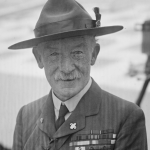
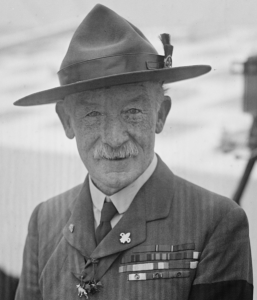
Robert Stephenson Smyth Baden-Powell, 1st Baron Baden-Powell was born on February 22nd, 1857. In addition to founding the International Scouting Movement, Powell was a Lieutenant-General with the British Army and later authored several books on military reconnaissance and training before completing Scouting for Boys in 1908.
 He tested some of his Scouting principles by taking a Boy’s Brigade to Brownsea Island in 1907.
Baden-Powell married Olave St. Clair in January 1912. They met on the RMSP Arcadian ocean liner while Baden-Powell was on his way to New York to kick off a Scouting World Tour. At the time of their marriage, St. Clair was 23 and Baden-Powell was 55. Though born many years apart, they shared the same birthday. This day is now known as Founder’s Day to Scouts.
He tested some of his Scouting principles by taking a Boy’s Brigade to Brownsea Island in 1907.
Baden-Powell married Olave St. Clair in January 1912. They met on the RMSP Arcadian ocean liner while Baden-Powell was on his way to New York to kick off a Scouting World Tour. At the time of their marriage, St. Clair was 23 and Baden-Powell was 55. Though born many years apart, they shared the same birthday. This day is now known as Founder’s Day to Scouts.
Baden-Powell served the British Army in campaigns in India and South Africa. It was on one of these military campaigns that he saw a large string of wooden beads around the neck Dinizulu, king of the Zulus. Years later, this encounter would inspire the Wood Badge leadership training within the Scouting movement.
Baden-Powell was almost always photographed in his signature Stetson Calvary Hat.
He was a talented artist and liked to draw and paint as hobbies.
Great Britain awarded Baden-Powell the Order of Merit in 1937. He retired from making public appearances for Scouting at the 5th World Scout Jamboree that same year.
Powell died on January 8th 1941. His grave can be found in St. Peter’s Cemetery. His last public words to the Scouts contained the message, “‘Be Prepared’ in this way, to live happy and to die happy — stick to your Scout Promise always — even after you have ceased to be a boy — and God help you to do it.”
.png)
via Wikipedia Commons
Baden-Powell served the British Army in campaigns in India and South Africa. It was on one of these military campaigns that he saw a large string of wooden beads around the neck Dinizulu, king of the Zulus. Years later, this encounter would inspire the Wood Badge leadership training within the Scouting movement.
Baden-Powell was almost always photographed in his signature Stetson Calvary Hat.
He was a talented artist and liked to draw and paint as hobbies.
Great Britain awarded Baden-Powell the Order of Merit in 1937. He retired from making public appearances for Scouting at the 5th World Scout Jamboree that same year.
Powell died on January 8th 1941. His grave can be found in St. Peter’s Cemetery. His last public words to the Scouts contained the message, “‘Be Prepared’ in this way, to live happy and to die happy — stick to your Scout Promise always — even after you have ceased to be a boy — and God help you to do it.”
The Birth of Cub Scouting®
February 11, 2011

1930 brought on a significant addition to Scouting with the development of Cub Scouting for younger boys.
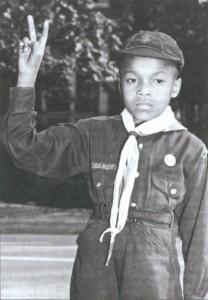
In the early years of the BSA, leaders recognized what they called a “younger boy problem,” meaning that boys below the age of 12 were watching their older brothers or relatives enjoy all Scouting had to offer and wanted to join in the fun. The problem was, until Cub Scouting became official, Boy Scout troops were either allowing younger boys to participate in the older boy’s program or throwing their support behind a junior program Baden Powell established in Britain called “Wolf Cubbing.” Powell had even written a handbook for younger boys entitled, The Wolf Cub’s Handbook.
Due to the popularity of Powell’s overseas program with some BSA Councils in America, the National organization decided they needed a program that would be separate from Scouting, but still do a thorough job of preparing boys for becoming Scouts.
After several studies conducted by the National Council and the formation of a few demonstration Cubbing units in 1929, Cubbing was officially born on April 1, 1930 when the BSA allowed Cub “Packs” to register. It is interesting to note that the term “Cub Scouting” didn’t take root until 1945. The Packs were further broken down into “dens” of six to ten boys who were led by a den chief, usually a Boy Scout from a local troop. However, because parental supervision was even more important with boys of this age, assigning one of the boy’s mothers as the “den mother” became regular practice by 1932. The BSA officially recognized Den Mothers in 1936 and published The Den Mother’s Handbook one year later.
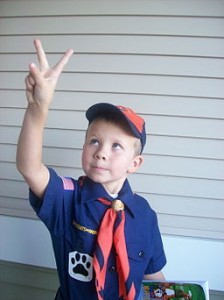
By the 1940’s there were already 286,402 boys enrolled in Cubbing and the BSA could not deny it had been an excellent addition. The organizational structure of Cubbing was this: a boy entered as a
Bobcat at the age of nine and earned advancements to Wolf, Bear, and finally Lion ranks. In 1941,
Webelos or “We’ll Be Loyal Scouts” were added. These were eleven-and-a-half year old boys who had already earned a Lion badge, along with certain requirements for becoming a Tenderfoot in the Scouts.
The uniform a Cub Scout wore showed their distinction of being a separate group from the older Boy Scouts. A Cub wore a blue cotton uniform instead of the Scout’s olive green pants and tan shirt. Cubs always wore shorts, while Scouts wore pants with shorts being optional.
The popularity of Cub Scouting and the mentoring that takes place within its ranks ensures that a fresh crop of boys will be eager to accept the honor and responsibility of being a Boy Scout every year.
Are you involved in Cub Scouting? If so, give a shout out to your Pack in the comments! Also, follow @ClassBPacks on twitter for Cub Scout news and weekly t-shirt giveaways :)
Used by permission. Boy Scouts of America® All Rights Reserved.
In the early years of the BSA, leaders recognized what they called a “younger boy problem,” meaning that boys below the age of 12 were watching their older brothers or relatives enjoy all Scouting had to offer and wanted to join in the fun. The problem was, until Cub Scouting became official, Boy Scout troops were either allowing younger boys to participate in the older boy’s program or throwing their support behind a junior program Baden Powell established in Britain called “Wolf Cubbing.” Powell had even written a handbook for younger boys entitled, The Wolf Cub’s Handbook.
Due to the popularity of Powell’s overseas program with some BSA Councils in America, the National organization decided they needed a program that would be separate from Scouting, but still do a thorough job of preparing boys for becoming Scouts.
After several studies conducted by the National Council and the formation of a few demonstration Cubbing units in 1929, Cubbing was officially born on April 1, 1930 when the BSA allowed Cub “Packs” to register. It is interesting to note that the term “Cub Scouting” didn’t take root until 1945. The Packs were further broken down into “dens” of six to ten boys who were led by a den chief, usually a Boy Scout from a local troop. However, because parental supervision was even more important with boys of this age, assigning one of the boy’s mothers as the “den mother” became regular practice by 1932. The BSA officially recognized Den Mothers in 1936 and published The Den Mother’s Handbook one year later.

via Wikipedia Commons
By the 1940’s there were already 286,402 boys enrolled in Cubbing and the BSA could not deny it had been an excellent addition. The organizational structure of Cubbing was this: a boy entered as a
Bobcat at the age of nine and earned advancements to Wolf, Bear, and finally Lion ranks. In 1941,
Webelos or “We’ll Be Loyal Scouts” were added. These were eleven-and-a-half year old boys who had already earned a Lion badge, along with certain requirements for becoming a Tenderfoot in the Scouts.
The uniform a Cub Scout wore showed their distinction of being a separate group from the older Boy Scouts. A Cub wore a blue cotton uniform instead of the Scout’s olive green pants and tan shirt. Cubs always wore shorts, while Scouts wore pants with shorts being optional.
The popularity of Cub Scouting and the mentoring that takes place within its ranks ensures that a fresh crop of boys will be eager to accept the honor and responsibility of being a Boy Scout every year.
Are you involved in Cub Scouting? If so, give a shout out to your Pack in the comments! Also, follow @ClassBPacks on twitter for Cub Scout news and weekly t-shirt giveaways :)
William Boyce, A Good Turn, and the Birth of the BSA®
February 9, 2011
To honor our loyal Scouting supporters, customers and volunteers, we’d like to use the month of February to focus this blog on events related to Scouting’s history. The first post having to do with the birthday of the BSA.
The BSA was founded on February 8th, 1910, but its origins can be traced back a little earlier, to a fateful day in London. Scouts and historians will debate how much, if any, fog there was that day, or what was or wasn’t discussed between William Boyce and the Boy Scout he encountered on the streets of London in 1909, but this is what is known.
William Boyce was traveling through London on his way to British East Africa when he lost his way and a Scout came to his aid. When Boyce offered to tip the boy, he refused explaining that he was just performing his daily good turn. This simple act has been immortalized as the legend of the Unknown Scout.
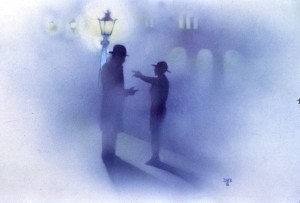
This exchange between the Scout and Boyce must have left a strong impression on the businessman, since Boyce went on to found the BSA a few months later.
It has been recorded by numerous sources that the Scout did tell Boyce the location of the Scout headquarters where Boyce acquired the manual and literature he used as a guide to establish Scouting in America.
This story is inspiring for many reasons.
First, it demonstrates how a simple act of kindness can have a lasting effect on a person. I’m sure William Boyce never forgot the Scout who so willingly and self-lessly assisted him that day.
Second, it reinforces that inspiration can strike at the least expected times, if a person remains open-minded and non-judgemental. Boyce was not at a business conference or dining with some wealthy dignitary when he had the meeting that would forever alter the course of his life. He was lost, standing in the street, unsure of where to go next, until he spoke to a Scout.
Finally, the story of how Boyce founded the BSA is another example of how one man can change the world by executing an idea and seeing a plan through. Boyce educated himself on Baden Powell‘s Scouting movement, made a conscience decision to start the BSA, and the youth organization he started has gone on for over 100 years and over 110 million participants.
Are you currently involved in Scouting? If so, what good turn that you performed had positive effects beyond what you expected?
The BSA was founded on February 8th, 1910, but its origins can be traced back a little earlier, to a fateful day in London. Scouts and historians will debate how much, if any, fog there was that day, or what was or wasn’t discussed between William Boyce and the Boy Scout he encountered on the streets of London in 1909, but this is what is known.
William Boyce was traveling through London on his way to British East Africa when he lost his way and a Scout came to his aid. When Boyce offered to tip the boy, he refused explaining that he was just performing his daily good turn. This simple act has been immortalized as the legend of the Unknown Scout.
Used by permission. Boy Scouts of America® All Rights Reserved.
This exchange between the Scout and Boyce must have left a strong impression on the businessman, since Boyce went on to found the BSA a few months later.
It has been recorded by numerous sources that the Scout did tell Boyce the location of the Scout headquarters where Boyce acquired the manual and literature he used as a guide to establish Scouting in America.
This story is inspiring for many reasons.
First, it demonstrates how a simple act of kindness can have a lasting effect on a person. I’m sure William Boyce never forgot the Scout who so willingly and self-lessly assisted him that day.
Second, it reinforces that inspiration can strike at the least expected times, if a person remains open-minded and non-judgemental. Boyce was not at a business conference or dining with some wealthy dignitary when he had the meeting that would forever alter the course of his life. He was lost, standing in the street, unsure of where to go next, until he spoke to a Scout.
Finally, the story of how Boyce founded the BSA is another example of how one man can change the world by executing an idea and seeing a plan through. Boyce educated himself on Baden Powell‘s Scouting movement, made a conscience decision to start the BSA, and the youth organization he started has gone on for over 100 years and over 110 million participants.
Are you currently involved in Scouting? If so, what good turn that you performed had positive effects beyond what you expected?